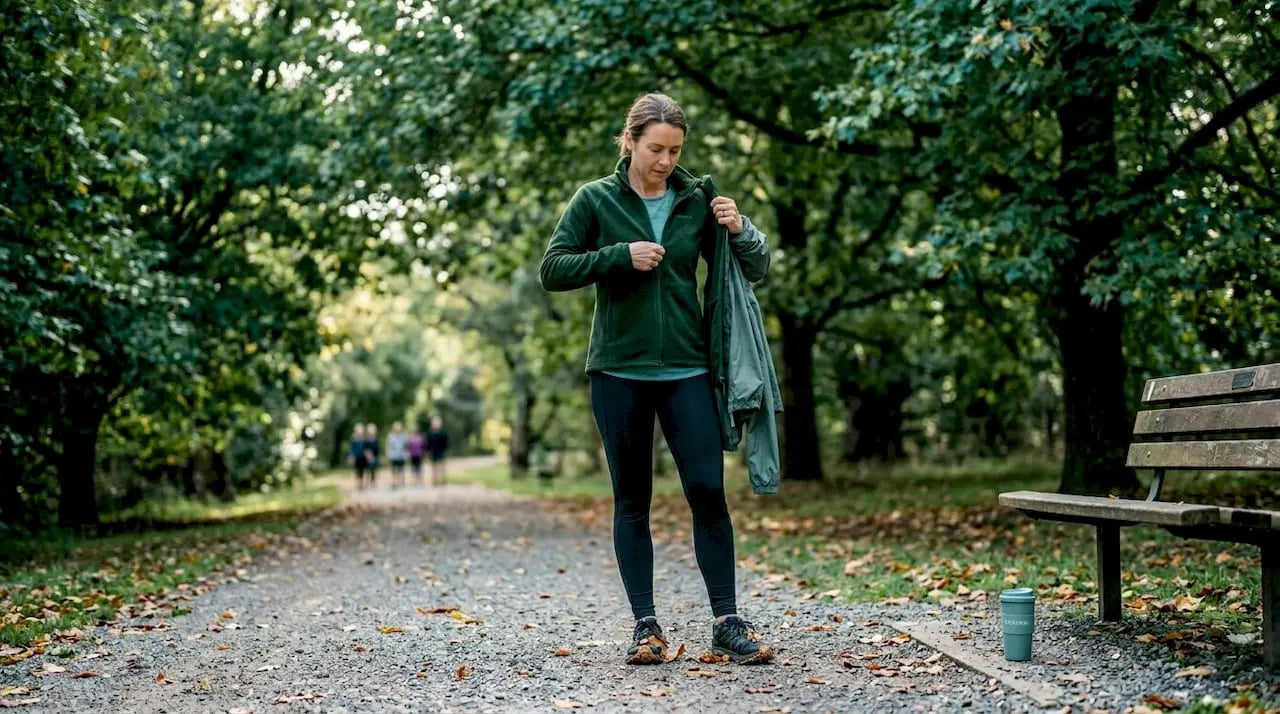
How to layer activewear for cold weather workouts
Getting your layering right for outdoor workouts in winter is genuinely tricky. Too many layers and you’re drenched in sweat before you hit the halfway mark. Too few and you’re shivering through your warm-up, risking the kind of cold stress that turns a good training session into a miserable one. When you layer activewear for cold weather workouts, the goal isn’t just warmth. It’s managing moisture, protecting your lungs, and staying mobile enough to actually move well. This guide covers exactly how to do that, from fabric choices to full outfit combinations for different conditions.
Table of Contents
- Key takeaways
- Layer activewear for cold weather workouts: the three-layer system
- Choosing the right activewear pieces for each layer
- Step-by-step layering for different workout scenarios
- Common layering mistakes to avoid
- Checking your system mid-workout
- My honest take on cold weather layering
- Build your cold weather workout kit with Skoki Maev
- FAQ
Key takeaways
| Point | Details |
|---|---|
| Three-layer system is non-negotiable | Base, mid, and outer layers each serve a distinct function that together prevent cold stress and moisture build-up. |
| Moisture management beats warmth alone | Wet clothing accelerates heat loss, so wicking fabrics at the base layer are more critical than sheer bulk. |
| Respiratory protection matters | Covering your nose and mouth with a scarf or mask warms and humidifies cold air before it reaches your lungs. |
| Dynamic layering improves performance | Adjusting layers during your workout, especially at rest stops, prevents overheating and dangerous chill. |
| Fit affects function | Layers must allow full range of motion; too tight restricts movement, too loose traps cold air ineffectively. |
Layer activewear for cold weather workouts: the three-layer system
The three-layer system is the foundation of any smart cold weather workout wardrobe. Each layer has a specific job, and understanding those jobs helps you make better decisions when you’re shopping or getting dressed before a morning run. The three-layer cold weather system works by managing moisture at the skin, trapping warm air in the middle, and blocking wind and rain on the outside.
The base layer: your moisture manager
The base layer sits directly against your skin and its primary job is to pull sweat away from your body. This is the layer that most people get wrong. Cotton feels soft, but it absorbs moisture and holds it against your skin, which dramatically accelerates heat loss. Synthetic fabrics like polyester and nylon, or natural fibres like merino wool, wick moisture outward so it can evaporate or be absorbed by the next layer.
A great example of base layer technology done well is Uniqlo Heattech, which converts body moisture into heat while staying thin and lightweight. For your legs, thermal leggings in a moisture-wicking fabric work the same way. The fit should be snug but not restrictive.
The mid layer: your insulator
The mid layer traps warm air close to your body. Fleece is the classic choice here because it insulates well even when damp and allows breathability. Insulated vests are a smart mid-layer option for workouts because they protect your core without restricting arm movement.
The outer layer: your shield
The outer layer blocks wind, rain, and snow. For most Australian winters, a lightweight windproof jacket is enough. In wetter conditions, a waterproof shell with ventilation zips is worth the investment. The outer layer doesn’t need to be thick. Its job is to stop the elements, not to add warmth.
| Layer | Primary function | Fabric examples |
|---|---|---|
| Base | Moisture wicking, thermal regulation | Merino wool, polyester, Heattech |
| Mid | Insulation, breathability | Fleece, down, synthetic fill |
| Outer | Wind and weather protection | Gore-Tex, nylon shell, softshell |
Pro Tip: When trying on layers together, mimic your workout movements in the fitting room. Reach overhead, bend forward, and swing your arms. If the outer layer rides up or the base layer bunches, the fit combination won’t work on the trail.
Choosing the right activewear pieces for each layer
Knowing the theory is one thing. Knowing which actual garments to reach for is another. Here’s how to build a practical cold weather workout wardrobe that covers all three layers without blowing your budget.
For your base layer, prioritise fit and fabric above everything else. Thermal leggings in a polyester-spandex blend give you the stretch you need for running, cycling, or yoga outdoors. Long-sleeve thermal tops should sit close to the body without restricting shoulder rotation. If you run cold, a merino wool base layer is worth the extra spend because it regulates temperature in both directions and resists odour better than synthetics.

For your legs specifically, Arc’teryx Kyanite leggings are a standout option. They have a brushed interior for warmth, excellent breathability during high-output activity, and they layer well under a shell in wet conditions. In dry cold, they work as a standalone pant. That kind of versatility matters when you’re packing light for a trail run or hike.
Mid-layer options worth considering:
- A zip-up fleece jacket that you can open at the chest during intense intervals
- An insulated vest for core warmth without restricting your arms during upper body movements
- A lightweight down jacket that packs into its own pocket for easy stowing when you heat up
For your outer layer, look for:
- A windproof running jacket with underarm vents for breathability
- A waterproof shell with a hood that fits over a helmet if you cycle
- Reflective detailing if you train in low-light conditions
Accessories are where many women underinvest. Covering your nose and mouth with a scarf or thermal gaiter warms and humidifies air before it reaches your airways, which reduces irritation significantly. Add thermal gloves, a moisture-wicking beanie, and merino wool socks to protect your extremities. Cold air can trigger asthma symptoms even in people without a formal diagnosis, so a face covering is a practical safety measure, not just a comfort one.
Pro Tip: Look for polarised running sunglasses when training outdoors in winter. Low sun angles and glare off wet surfaces are harder on your eyes than summer sun, and good eyewear reduces fatigue on longer sessions.
Step-by-step layering for different workout scenarios
Layering isn’t a one-size-fits-all formula. The right combination depends on your workout intensity, the temperature, and whether conditions are dry, wet, or windy. Here’s how to think through it.
Step 1: Start with your base layer regardless of conditions. Moisture-wicking thermal leggings and a long-sleeve thermal top are your non-negotiables.
Step 2: Assess your workout intensity. High-intensity sessions like interval running or circuit training generate significant body heat. You may only need a lightweight windproof jacket over your base layer. Low-intensity sessions like walking, yoga outdoors, or hiking require a full mid layer for insulation.
Step 3: Check the conditions. Dry cold below 10°C calls for base plus mid plus a windproof outer. Wet or windy conditions require a waterproof shell as your outer layer regardless of temperature.
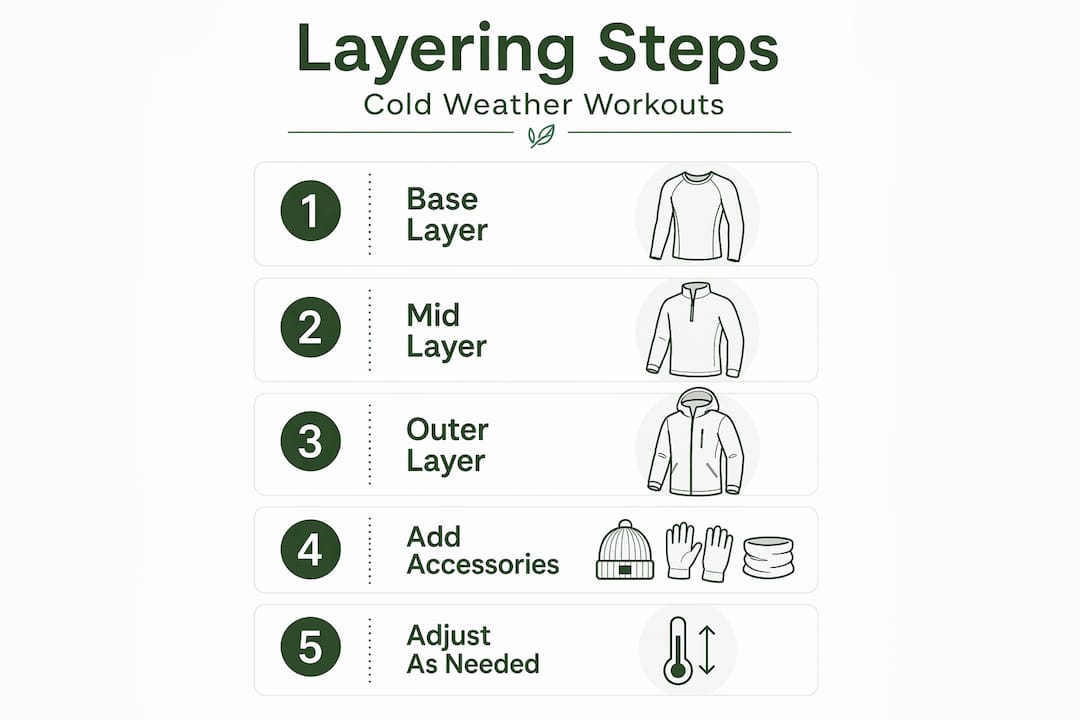
Step 4: Add accessories for exposed areas. Gloves, a beanie, and a neck gaiter cover the areas where heat loss is fastest.
Step 5: Plan for stops. Layering versatility is critical when your body heat drops during rest periods. Pack a lightweight insulating layer you can pull on quickly when you pause.
| Condition | Intensity | Recommended layers |
|---|---|---|
| Dry cold, 5-10°C | High (running, HIIT) | Thermal base + windproof outer |
| Dry cold, below 5°C | High | Thermal base + light fleece + windproof outer |
| Wet or windy, any temp | Any | Thermal base + mid layer + waterproof shell |
| Dry cold, below 5°C | Low (walking, yoga) | Thermal base + insulated mid + windproof outer |
Managing moisture during your workout is an ongoing task. If you feel sweat accumulating under your mid layer during a high-intensity phase, unzip your outer layer at the chest to release heat. When you stop, zip back up immediately. Wet clothing increases heat loss rapidly, and the transition from moving to standing still is when most cold stress occurs.
Common layering mistakes to avoid
Even with the right gear, a few common errors can undermine your whole system.
- Wearing cotton as a base layer. Cotton holds moisture against your skin and becomes a liability the moment you start sweating. Swap it for polyester, nylon, or merino wool every time.
- Skipping the outer layer on windy days. Wind chill can make a 10°C day feel like 2°C. A thin windproof jacket weighs almost nothing and makes an enormous difference.
- Over-layering for high-intensity workouts. More layers trap more heat, which means more sweat, which means more moisture against your skin. Match your layers to your actual exertion level.
- Ignoring respiratory protection. Cold, dry air irritates your airways and can trigger breathing issues. A scarf or gaiter over your nose and mouth is a simple fix that many women skip.
- Wearing layers that are too loose. Excess fabric creates cold air pockets that your body has to work harder to warm. Fitted layers work more efficiently.
- Not changing out of wet layers post-workout. Changing out of wet clothes immediately after finishing is as important as the layering itself. Staying in damp gear after you’ve stopped moving is a genuine cold stress risk.
A quick mental checklist before you head out: Is my base layer wicking? Is my mid layer insulating without restricting movement? Does my outer layer block wind and rain? Are my extremities and face covered? If yes to all four, you’re set.
Checking your system mid-workout
Layering isn’t something you set and forget. Your body temperature changes as your intensity shifts, and your gear needs to respond to that.
Check for moisture build-up at the 15 to 20 minute mark of your workout. If your base layer feels saturated, you’re either over-layered or your base layer fabric isn’t wicking effectively. Signs of overheating include excessive sweating, feeling flushed, and a strong urge to strip off layers. Signs of chilling include shivering, stiff fingers, and a drop in your motivation to keep moving.
Breathability matters as much as warmth. If you feel like you’re breathing through a bag, your outer layer may not have enough ventilation. Look for jackets with underarm zips or chest vents that you can open during intense phases.
For longer sessions, adjusting layers dynamically improves both safety and performance. Take a brief pause every 30 to 40 minutes to assess how you’re feeling and adjust accordingly.
Pro Tip: Pack a small dry bag with a compact insulating layer and a quick-dry microfibre towel for workouts over 60 minutes. When you stop for water or a stretch, the towel lets you wipe down before pulling on your extra layer, keeping moisture from building up.
My honest take on cold weather layering
I’ve spent a lot of time testing layering combinations for outdoor workouts, and the single biggest shift in my thinking has been this: layering is a moisture management problem, not a warmth problem.
Most women I talk to instinctively pile on more layers when it’s cold. But the discomfort usually isn’t from insufficient warmth. It’s from sweat that has nowhere to go. Once I started treating my base layer as the most important piece in the system, everything else clicked.
The other thing I’d push back on is the idea that face coverings are optional. I used to skip mine because it felt awkward. After a few winters of dealing with irritated airways on cold morning runs, I now treat a neck gaiter the same way I treat my sports bra. Non-negotiable.
The best layering system is the one you’ll actually adjust mid-workout. If your layers are too fiddly to remove or add on the go, you won’t bother, and that’s when the system breaks down. Prioritise pieces with easy zips, compact packability, and a fit that works across all three layers together.
— Katie
Build your cold weather workout kit with Skoki Maev
If you’re ready to put this layering system into practice, having the right pieces makes all the difference. At Skoki Maev, the focus is on women’s performance activewear built for real conditions. That means thermal fabrics that actually wick, outer layers that move with you, and fits designed for the way women’s bodies work during exercise.

Whether you’re building your first cold weather workout wardrobe or replacing pieces that aren’t performing, you’ll find thermal activewear for women across all three layers at Skoki Maev. From moisture-wicking base layers to windproof shells, the range is built around the same principles covered in this guide. Browse the full collection and put together a system that works for your training, your climate, and your style.
FAQ
What is the best base layer for cold weather workouts?
The best base layer for cold weather workouts is a moisture-wicking fabric like polyester, nylon, or merino wool. Avoid cotton, which holds sweat against your skin and accelerates heat loss.
How many layers do I need for outdoor winter exercise?
Most cold weather workouts require three layers: a moisture-wicking base, an insulating mid layer, and a windproof or waterproof outer layer. High-intensity sessions in mild cold may only need two.
Should I cover my face when exercising in the cold?
Yes. Covering your nose and mouth with a scarf or gaiter warms and humidifies cold air before it reaches your airways, reducing irritation and the risk of exercise-induced breathing issues.
Why do I feel cold even when I’m wearing lots of layers?
Over-layering can cause excessive sweating, and wet clothing loses its insulating properties quickly. The issue is often moisture management rather than insufficient warmth. Check that your base layer is a wicking fabric, not cotton.
When should I adjust my layers during a workout?
Adjust your layers dynamically whenever your intensity changes significantly or when you stop moving. Rest periods are when body temperature drops fastest, so adding a layer quickly during pauses prevents cold stress.