High-intensity workout outfit essentials for active women
You pull on your favourite leggings, lace up your trainers, and hit the first set of burpees hard — then your waistband rolls, your bra bounces, and you’re already overheating by round two. Most activewear is designed for the gym floor in general, not the specific chaos of high-intensity interval training (HIIT). The wrong kit doesn’t just feel annoying; it pulls your focus away from form and effort, which is exactly where your attention needs to stay. This guide cuts through the noise with evidence-based essentials, practical fit advice, and style-forward picks that actually hold up when the intensity spikes.
Table of Contents
- What makes an outfit HIIT-ready: criteria for essentials
- Essential 1: high-support sports bra
- Essential 2: bottoms with secure waistband and no ride-up
- Essential 3: moisture-wicking, breathable tops
- Essential 4: footwear for multi-directional support and grip
- Do you need extras? Compression, layering, and when to add more
- Our take: stop chasing trends and start solving problems
- Elevate your HIIT kit with Skoki Maev
- Frequently asked questions
Key Takeaways
| Point | Details |
|---|---|
| Prioritise support and fit | Choose high-support bras and secure-waist bottoms to prevent distractions or discomfort during HIIT. |
| Moisture management matters | Select moisture-wicking and breathable fabrics for tops and bottoms to enhance comfort but keep expectations realistic for sweat control. |
| Stability in footwear | HIIT shoes must offer multi-directional grip and reinforced sides for injury prevention and agility. |
| Layer by workout, not weather | Plan compression and layers based on exercise intensity, avoiding thick or slow-drying pieces for high-output intervals. |
What makes an outfit HIIT-ready: criteria for essentials
Before you spend a cent on new gear, it helps to understand exactly where activewear fails during HIIT. The movements are fast, multi-directional, and relentless — think jump squats, lateral shuffles, box jumps, and sprint intervals back to back. That combination exposes every weakness in fabric and construction.
The four most common gear failures during HIIT are:
- Bra bounce: Inadequate support causes breast tissue to move excessively, leading to discomfort and distraction.
- Bottoms riding up or rolling: Waistbands that lack structure shift during explosive lower-body moves.
- Overheating and moisture build-up: Fabrics that trap sweat make you feel heavier and hotter as the session progresses.
- Shoe instability: Footwear without lateral grip causes slipping during directional changes, increasing injury risk.
A true performance essential solves these problems before they become distractions. As outlined in research on garment failure modes, the most useful HIIT essentials are the ones preventing bounce, ride-up, heat discomfort, and instability from the very first rep.
Style absolutely matters — feeling good in your kit is part of the motivation to show up. But always start your selection process with fit, breathability, and stability. Style is the bonus, not the starting point.
“Prioritise comfort above all else when sweat and movement spike — a garment that looks great but shifts every three reps will cost you far more than it gives you.” — activewear performance expert
Pro Tip: Before buying any HIIT bottoms or bra, do five jump squats in the fitting room. If anything moves, rolls, or gaps, put it back on the rack.
Essential 1: high-support sports bra
Your sports bra is the single most important piece of kit you’ll put on before a HIIT session. No other garment has as direct an impact on your ability to move freely and comfortably through high-impact moves. A low-support bra during box jumps or skipping is not just uncomfortable — it’s a genuine barrier to full effort.
What to look for in a HIIT-ready sports bra:
- High-impact rating: Look for bras specifically labelled for high-impact activity, not just “sport.”
- Adjustable straps and band: A customisable fit means you can dial in support as your body changes or your training intensity shifts.
- Flat or bonded seams: Chafing under the arms or across the back becomes a real issue once sweat is involved.
- Moisture-wicking, quick-dry fabric: Synthetic blends like polyester with elastane pull sweat away from the skin and dry fast, reducing irritation and bacterial build-up.
- Encapsulation or compression design: Encapsulation cups each breast individually for maximum control; compression holds everything close to the body. Many high-support bras combine both.
A reliable HIIT starter kit for active women always begins with a high-support bra as the non-negotiable foundation, followed by secure bottoms, a moisture-wicking top, and appropriate footwear.
Statistic: Studies consistently show that breast discomfort during exercise is one of the top reasons women reduce workout intensity or stop exercising altogether. Getting your bra right is not a luxury — it’s a performance decision.
Layering compatibility matters too. If you train outdoors in cooler months, your bra should sit comfortably under a lightweight jacket without bunching or adding bulk across the chest.
Pro Tip: When trying on sports bras, don’t just stand still. Jog on the spot, do jumping jacks, and lean forward. If the bra shifts or the band rides up, the support level is insufficient for HIIT.
Essential 2: bottoms with secure waistband and no ride-up
Once you’ve got support locked down, your next battle is making sure your bottoms stay put — no distractions, no mid-session adjustments, no awkward tugging between sets. This sounds like a small thing until you’re three rounds deep and your tights have rolled down to your hips.
The most common problems with HIIT bottoms include:
- Rolling waistbands: Thin or unsupported waistbands fold under pressure from jumping and bending.
- Fabric sag: Low-quality fabric loses its shape when wet with sweat, creating drag and discomfort.
- Ride-up in the leg: Shorts or tights that creep upward during lunges and lateral moves are a constant distraction.
- Slow-drying material: Heavy fabric that holds moisture adds weight and creates chafing.
Look for bottoms with a wide, structured waistband — ideally with a flat inner grip strip that anchors the waistband to your skin. Zero ride-up construction, where the inseam is cut and stitched to stay in place during dynamic movement, is worth prioritising. Moisture-wicking or ventilated panels (mesh inserts at the back of the knee or inner thigh) make a real difference in comfort during long HIIT sessions.
Compression is a personal preference. Some women love the muscle-hugging feel and the sense of stability it provides; others find it restrictive during fast footwork. There’s no single right answer — but if you do choose compression, make sure the fabric is lightweight and quick-drying.
“HIIT clothing is a practical systems problem: garments must remain comfortable when intensity and sweating spike, because midweight base layers can hold heat and dry slowly during interval sessions — a real edge case that affects performance.”
For warmer climates or indoor studios, shorter inseams with ventilated fabric are your best friend. In cooler conditions, full-length tights with a brushed inner lining offer warmth without sacrificing the secure fit you need.
Essential 3: moisture-wicking, breathable tops
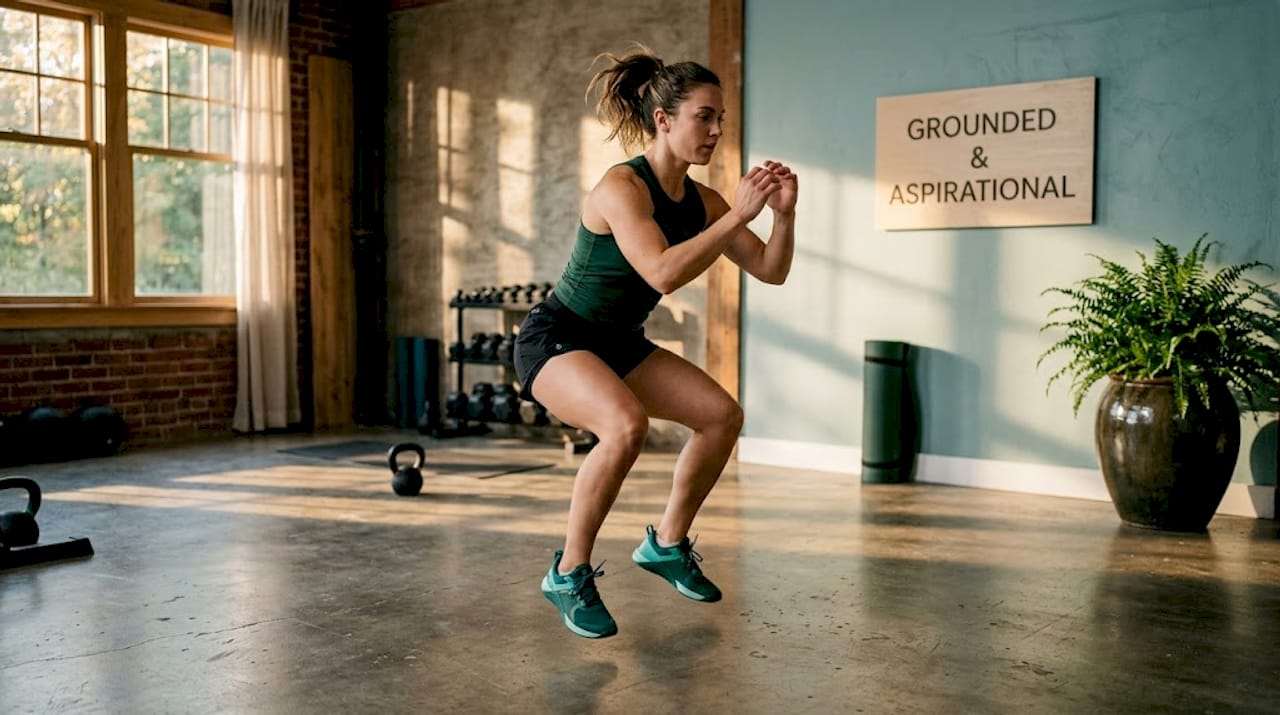
With your base layers sorted below, the next thing people notice — and sweat through — is their top. Choosing the right one is less about finding a magic “cool” fabric and more about understanding what breathability actually does and doesn’t deliver.
Here’s the honest truth: breathable tops can reduce local skin humidity and make the area around your torso feel less clammy, but they won’t meaningfully lower your core body temperature or reduce how much you sweat overall during HIIT. That’s your body’s thermoregulation system doing its job. What a good top can do is make the experience feel significantly more comfortable by moving moisture away from the skin quickly.
Features to look for in a HIIT-ready top:
- Raglan sleeves: Cut away from the shoulder seam to allow full arm rotation without restriction.
- Mesh ventilation zones: Strategically placed at the upper back, underarms, or sides where heat accumulates fastest.
- Quick-dry synthetic fabric: Polyester or nylon blends dry far faster than cotton, which stays wet and heavy.
- Relaxed but not oversized fit: A top that’s too loose can bunch under a bra band or get caught during overhead moves.
- Flat-lock stitching: Reduces friction against skin during repetitive movements.
“Breathability and better garment microclimate can reduce local humidity and skin temperature in hot running, but may not change whole-body sweat rate or core thermoregulation — expectations should be realistic, especially for HIIT in moderate conditions.”
Pro Tip: Skip the midweight long-sleeve top for indoor HIIT entirely. Save it for outdoor sessions where wind chill is a factor. Inside, a lightweight short-sleeve or crop with mesh panels will almost always outperform a heavier layer.
Cotton tees are comfortable for low-intensity movement, but during HIIT they become a liability. They absorb sweat, stay wet, get heavy, and create friction. If you’re still reaching for a cotton tee out of habit, it’s time to make the switch.
Essential 4: footwear for multi-directional support and grip
Now, let’s touch the ground: your shoes are the last essential barrier between you and full-power moves. And this is where a lot of women make a costly mistake — wearing running shoes for HIIT.
Running shoes are engineered for forward motion. They have thick, cushioned midsoles that absorb heel-strike impact over long distances. That same cushioning becomes a liability during lateral shuffles, box jumps, and agility drills, where you need a firm, stable platform and grip in all directions.
| Feature | HIIT shoes | Running shoes |
|---|---|---|
| Sole thickness | Low to moderate | High (cushioned) |
| Lateral support | Reinforced sidewalls | Minimal |
| Outsole traction | Multi-directional grip | Forward-focused |
| Flexibility | Flexible forefoot | Varies |
| Best for | Intervals, agility, lifting | Distance running |
What to look for in a HIIT-appropriate shoe:
- Reinforced sidewalls: Prevent your foot from rolling during lateral cuts and direction changes.
- Multi-directional outsole traction: Grip that works whether you’re pushing forward, sideways, or pivoting.
- Flexible forefoot: Allows natural toe-off during jumping and sprinting.
- Secure lacing system: No slipping inside the shoe during fast footwork.
- Low-to-moderate heel drop: Keeps you closer to the ground for better proprioception (body awareness during movement).
Statistic: Wearing inappropriate footwear during high-intensity training is linked to increased risk of ankle sprains and knee stress injuries, particularly during lateral movement drills. Getting your shoes right is as important as any other piece of kit.
When you’re testing shoes in-store, don’t just walk around. Do a few lateral lunges and quick side steps. If your foot slides inside the shoe or the sole feels unstable, keep looking.
Do you need extras? Compression, layering, and when to add more
With the must-haves checked off, here’s a look at extras you may want — or want to avoid — for different HIIT scenarios.
- Compression sleeves (arms or calves): Useful for reducing muscle vibration during jump-heavy sessions and aiding recovery post-workout. Best suited to women who train frequently and want to manage muscle fatigue across multiple sessions per week.
- Lightweight warm-up jacket: Ideal for outdoor HIIT or cold studio warm-ups. Choose one that’s easy to remove and tie around your waist mid-session.
- Midweight base layers: Only appropriate for outdoor HIIT in genuinely cold conditions. Avoid them for indoor intervals — they trap heat and dry slowly, which becomes counterproductive when your output surges.
- Headbands and hair ties: Underrated essentials. Anything that keeps hair off your face during burpees is worth its weight.
- Grip socks: Useful for studio HIIT on smooth floors, particularly during bodyweight or yoga-adjacent interval work.
| Extra item | Add for HIIT | Skip for HIIT |
|---|---|---|
| Compression tights | ✓ Lightweight, quick-dry | ✗ Heavy, slow-dry |
| Midweight base layer | ✗ Indoor HIIT | ✓ Outdoor cold only |
| Warm-up jacket | ✓ Pre-session warm-up | ✗ During max intervals |
| Compression sleeves | ✓ High-frequency training | ✗ Occasional sessions |
Pro Tip: Test any layering during your warm-up, not during your working sets. If you’re already too warm by the end of the warm-up, strip the layer before the intervals begin. Don’t wait until you’re overheating mid-round.
Our take: stop chasing trends and start solving problems
Here’s something the activewear industry doesn’t want you to think too hard about: most “performance” marketing is aimed at how gear looks, not how it functions under genuine stress. A beautiful print on a pair of tights means nothing if the waistband rolls on your first set of jump squats.
At Skoki Maev, we’ve seen this pattern repeatedly. Women come to us frustrated after spending good money on gear that looked incredible on the model but fell apart in practice. The shift happens when you stop asking “does this look good?” first and start asking “does this solve the specific problem I have during HIIT?”
That’s not to say style is irrelevant — it absolutely isn’t. Feeling confident and put-together in your kit is a genuine psychological performance boost. But the best activewear earns its style credibility by performing first. A high-support bra that fits perfectly and comes in a colour you love? That’s the goal. A gorgeous crop top that soaks through and chafes? That’s a marketing win for the brand and a loss for you.
The most underrated move any active woman can make is to build a small, intentional kit of true essentials rather than a wardrobe full of gear that’s mediocre across the board. Four or five pieces that genuinely work will always outperform twenty pieces that sort of work.
Elevate your HIIT kit with Skoki Maev
You’ve done the research. Now it’s time to put it into practice with activewear that’s built specifically for the demands of high-intensity training.
At Skoki Maev, every piece in our women’s performance range is designed around the four failure modes that matter most during HIIT: bounce, ride-up, heat build-up, and instability. From high-support sports bras with moisture-wicking fabric to zero ride-up tights with structured waistbands, our collections are made for women who train hard and want to look great doing it. Explore our full range and build the intentional, high-performance kit your training deserves.
Frequently asked questions
What fabrics are best for high-intensity workouts?
Look for moisture-wicking synthetic blends such as polyester with elastane, which offer quick-dry performance, shape retention, and stretch for dynamic movement.
Should I wear compression gear for HIIT?
Compression can boost comfort and muscle support during high-frequency training, but avoid thick or slow-drying layers — plan your kit by output demands, not just temperature.
Do breathable tops help keep me cooler in HIIT?
Breathable tops reduce local skin humidity and improve garment comfort, but they won’t lower your core body temperature or reduce your overall sweat rate during HIIT.
How should I check if HIIT shoes are suitable for lateral moves?
Test reinforced sidewalls and lateral grip by doing side lunges and quick shuffles during a store try-on — if your foot slides or the sole feels wobbly, the shoe isn’t HIIT-ready.