Why workout clothes affect performance: the science
Workout clothes affect performance by directly influencing your body’s ability to regulate heat, manage sweat, support muscles, and maintain the mental focus needed to push through a hard session. This is not a matter of aesthetics or brand loyalty. A 2026 study published in Scientific Reports found that comfort-related fabric variables like moisture handling and heat protection correlated with significantly higher motivation scores, confirming that the impact of workout apparel extends well beyond how you look in the mirror. The right exercise clothing performance starts at the fibre level and works its way up to your mindset before you even begin your warm-up.
Why workout clothes affect performance: the thermal regulation factor
Your body generates heat the moment you start moving, and your ability to shed that heat determines how long and how hard you can sustain effort. Thermal comfort is not a luxury consideration. It is a physiological requirement for prolonged activity, and when it fails, both cognitive function and motivation decline well before your muscles give out.
Advanced textile engineering has made this problem solvable in ways that cotton simply cannot match. A 2026 study published in Nature Communications demonstrated that radiative-cooling textiles with directional sweat transport maintained 84.4% emissivity after sweating, producing skin temperatures up to 7.3°C cooler than cotton in hot outdoor conditions. That temperature difference is the gap between finishing a run feeling strong and stopping early because your body is overheating.
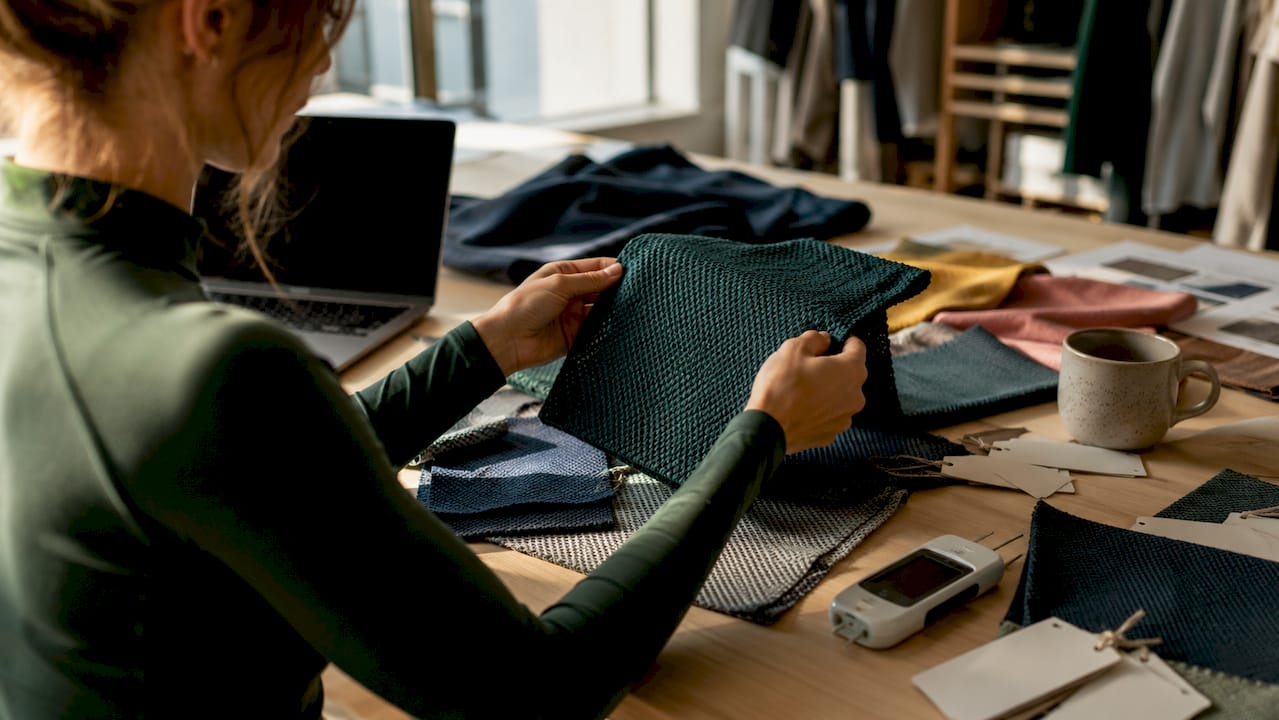
Evaporative cooling garments add another layer of complexity. A 2026 thermal-manikin study found that vest cooling capacity can exceed 80 W at 40°C with 1 m/s airflow, but the same garment performs very differently depending on humidity and airflow conditions. This means the best fabrics for workouts are not universally superior. They are context-dependent, and understanding your training environment matters.
Pro Tip: If you train outdoors in Australian summer heat, prioritise garments with engineered radiative-cooling properties rather than standard polyester blends. The difference in skin temperature is measurable and directly affects how long you can sustain intensity.
Key thermal performance factors to look for in activewear:
- Fabrics that retain cooling properties after sweating, not just when dry
- Garment designs that promote airflow across high-heat zones like the back and underarms
- Lightweight knit structures that allow convective heat loss during movement
- Moisture-transport layers that move sweat away from skin before it traps heat
What role does fabric knit structure play in sweat management?
Moisture management in workout gear is more technical than the phrase “moisture-wicking” suggests. The term covers at least three distinct mechanisms: absorption rate, lateral spreading speed, and one-way transport from skin to the outer surface. A garment can perform well on one measure and poorly on another, which is why two polyester tops that look identical can feel completely different mid-workout.
A 2026 study on knitted-fabric moisture management found statistically significant differences in moisture transport performance among four polyester microfibre fabrics with different knit architectures. The knit structure, not just the fibre type, controls how sweat moves through the fabric. This explains why a cheap polyester tee and a performance-grade sports jersey made from the same base material can produce wildly different comfort outcomes.
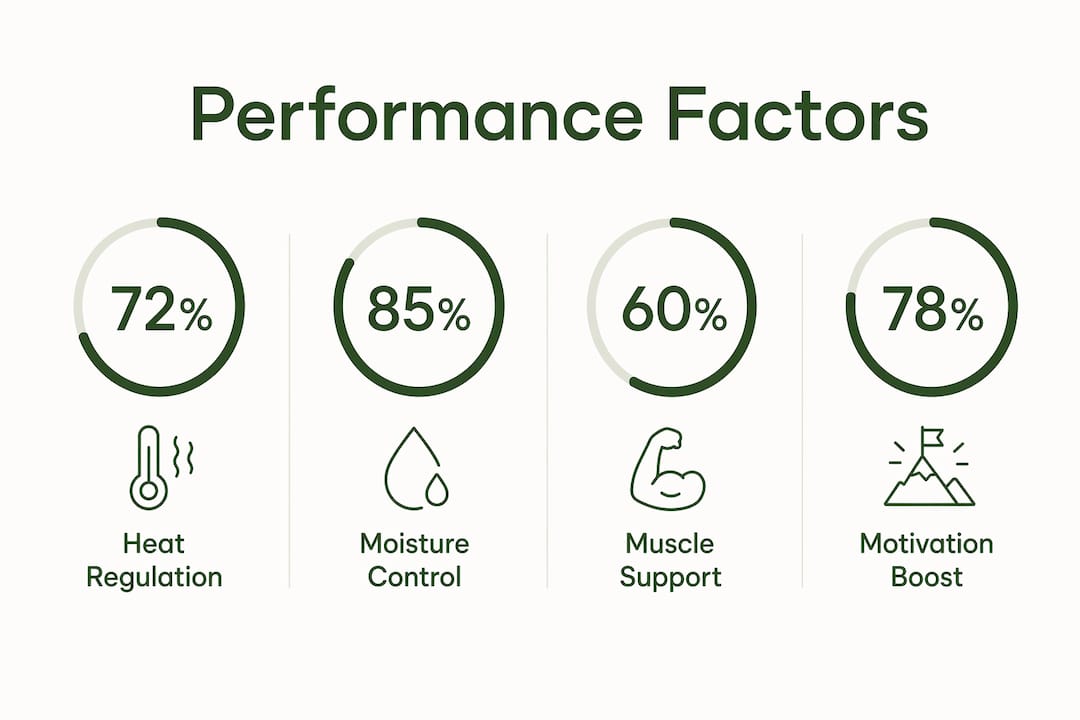
Clamminess is the enemy of sustained effort. When sweat pools against your skin, it creates friction, raises perceived exertion, and reduces your willingness to keep going. Selecting garments with tested moisture transport properties, particularly those with asymmetric knit structures designed for one-way fluid movement, reduces that clammy feeling and keeps you focused on your session rather than your discomfort.
| Fabric property | What it affects | What to look for |
|---|---|---|
| Absorption rate | How quickly sweat leaves skin | Fast-wicking microfibre knits |
| Spreading speed | How evenly moisture distributes | Wide-spread knit architecture |
| One-way transport | Whether sweat returns to skin | Asymmetric or layered knit design |
| Surface wettability | How dry the outer layer feels | Hydrophobic outer face treatments |
Pro Tip: When shopping for workout tops or leggings, look for brands that publish moisture management test data rather than just using the word “wicking” as a marketing term. Verified performance data tells you what the garment actually does.
How can compression garments enhance muscle support during exercise?
Compression garments occupy a specific and well-researched niche in exercise clothing performance. Their primary function is mechanical: they apply graduated pressure to muscles and joints, which reduces muscle oscillation during impact, improves proprioception, and supports joint alignment during dynamic movements like jumping, squatting, and changing direction.
A 2026 study in Scientific Reports showed that compression legwear improves knee biomechanics and inter-joint coordination during depth jumps, with effects depending on garment length and applied pressure. Better joint coordination means more efficient movement patterns, which translates directly to reduced injury risk and improved output over a training session.
The pressure range matters enormously. Research confirms that 10 to 20 mmHg compression is the safe and effective range for performance enhancement and recovery. Below that range, the mechanical benefit is minimal. Above it, discomfort and restricted circulation become real concerns. The challenge is that manufacturer-stated pressure values are not always accurate, and fabric elastane content significantly affects how pressure is actually delivered at the skin.
What to consider when selecting compression garments:
- Look for garments with verified interface pressure data, not just manufacturer claims
- Prioritise fabrics with higher elastane content (around 31%) for consistent pressure recovery after repeated wear
- Match garment length to your activity. Knee-length tights offer different biomechanical support than full-length options
- Fit should feel firm but never restrictive to circulation or breathing
- Wash and replace compression garments regularly, as elastane degrades and pressure consistency drops with repeated laundering
A 2025 study on torso compression garment design found that interlock spacer fabrics with approximately 31% elastane showed near-complete pressure recovery within one minute of compression. This matters for active women because it means the garment rebounds to its correct pressure level between movements rather than sagging and losing its support function mid-session.
What psychological effects do workout clothes have on motivation?
The psychological dimension of how clothing influences exercise is one of the most underappreciated aspects of workout gear and performance. Comfort is not purely physical. It is cognitive. When you feel protected from heat and sweat, when your clothes move with your body without restriction, your brain interprets that as readiness. That interpretation changes your approach to the session.
Research published in Scientific Reports in 2026 found that perceived protection against heat and sweating strongly correlated with higher scores on motivation sub-dimensions including confidence and approach-oriented behaviour. Participants who felt their sportswear was managing heat and sweat effectively were significantly more motivated to pursue performance goals. This is a direct link between fabric function and psychological output.
The reverse is equally true. Thermophysiological discomfort, the feeling of being too hot, too sweaty, or physically restricted, slows cognitive processing and reduces exercise commitment. You are less likely to attempt a heavier lift or push through the final kilometre of a run when your body is sending distress signals through an uncomfortable garment.
Three ways workout clothing shapes your psychological readiness:
- Comfort as confidence. When your clothes fit well and feel good against your skin, you enter a session with a stronger sense of physical capability. This is not vanity. It is a documented psychological mechanism.
- Distraction reduction. Garments that chafe, ride up, or feel clammy pull your attention away from effort and technique. Removing that distraction allows greater focus on performance.
- Thermal perception. Feeling cool and dry signals to your brain that you have capacity in reserve. That perception delays the mental decision to slow down or stop, even when physical fatigue is present.
How to choose workout clothes that maximise performance
Choosing performance-enhancing clothing is a practical decision that rewards specificity. Generic advice to “wear breathable fabrics” misses the nuance that actually separates effective activewear from expensive marketing.
Pro Tip: Before buying new workout gear, identify your primary training environment. Outdoor summer training in Queensland demands different fabric engineering than an air-conditioned gym in Melbourne. Match the garment to the conditions, not just the activity.
| Training environment | Priority fabric feature | Recommended garment type |
|---|---|---|
| Hot and humid outdoors | Radiative cooling and sweat transport | Engineered cooling tops with directional wicking |
| Air-conditioned gym | Moisture spreading and dry feel | Asymmetric knit polyester microfibre |
| High-impact training | Compression and joint support | Graduated compression tights, 10 to 20 mmHg |
| Mixed conditions | Versatile moisture management | Multi-layer knit with hydrophobic outer face |
For active women training across different conditions, the most practical approach is to build a small kit of garments that each serve a specific function. A radiative-cooling top for outdoor sessions, a well-fitted compression tight for strength and plyometric work, and a moisture-managing mid-layer for cooler conditions covers most training scenarios without requiring a wardrobe overhaul.
When assessing any garment, look for published test data on moisture transport, verified compression pressure ratings, and fabric compositions that include sufficient elastane for recovery. The benefits of athletic wear are real and measurable, but only when the garment is engineered to deliver them rather than simply labelled to suggest it.
Key takeaways
Workout clothes affect performance through four measurable pathways: thermal regulation, moisture management, compression mechanics, and psychological readiness, and each pathway is determined by specific, testable fabric and design properties.
| Point | Details |
|---|---|
| Thermal regulation matters | Radiative-cooling fabrics can produce skin temperatures up to 7.3°C cooler than cotton, directly sustaining exercise capacity. |
| Knit structure drives wicking | Fabric architecture, not just fibre type, controls sweat absorption, spreading, and one-way transport during workouts. |
| Compression requires correct pressure | The effective range is 10 to 20 mmHg. Outside this range, benefits diminish or discomfort increases. |
| Comfort shapes motivation | Perceived protection against heat and sweat correlates with significantly higher motivation and confidence scores. |
| Match garment to environment | The same fabric performs differently across humidity and airflow conditions. Context determines effectiveness. |
What I have learned from years of watching women train in the wrong kit
Katie here. I want to say something that most activewear content avoids: the biggest performance gains I have seen in active women have not come from training programmes or nutrition adjustments. They have come from getting the kit right.
I have watched women cut sessions short in summer because their tops were trapping heat against their skin. I have seen knee discomfort improve noticeably when someone switched from a fashion-grade tight to a properly graduated compression garment. I have also seen the reverse, where a garment marketed as “compression” was doing nothing measurable because the elastane content was too low to maintain consistent pressure through a session.
The psychological piece is the one I feel most strongly about. When you pull on something that fits well, moves with you, and keeps you feeling dry and cool, you train differently. You attempt more. You stay longer. You come back the next day. That is not a soft benefit. That is the compounding effect of consistent training, and it starts with what you wear.
My honest recommendation is to treat your activewear as training equipment, not fashion. Buy fewer pieces, buy better ones, and prioritise verified performance properties over brand names and colour palettes. Your body will tell you the difference within the first session.
— Katie
Gear that actually does what it claims
If this article has shifted how you think about exercise clothing performance, the next step is finding garments that are built to the standards discussed here. Skoki Maev designs women’s performance activewear with thermal comfort, moisture management, and compression fit as core engineering priorities, not afterthoughts.
Browse the Skoki Maev collection to find pieces suited to your training environment, whether that is outdoor summer sessions, gym-based strength work, or high-intensity interval training. Every garment is selected with the fabric properties that active women actually need. You can also explore performance-grade moisture management options to understand what verified wicking performance looks like in practice.
FAQ
Do workout clothes actually improve athletic performance?
Yes. Research confirms that workout clothes affect performance through thermal regulation, moisture management, compression mechanics, and psychological motivation. A 2026 Scientific Reports study found that fabric comfort variables directly correlated with higher motivation and performance scores.
What is the best fabric for workout clothes?
Polyester microfibre with an engineered knit structure is the most effective base fabric for most workouts, as it manages moisture transport across multiple mechanisms. For hot outdoor conditions, radiative-cooling textiles that maintain their properties after sweating outperform standard polyester significantly.
How tight should compression workout clothes be?
Compression garments should apply between 10 and 20 mmHg of pressure for safe and effective performance benefits. They should feel firm and supportive without restricting circulation or breathing. Garments with approximately 31% elastane content maintain consistent pressure recovery between movements.
Does what you wear to the gym affect your motivation?
Research published in Scientific Reports in 2026 found that perceived sportswear comfort against heat and sweat significantly increased motivation scores. Feeling physically comfortable in your workout gear directly influences your psychological readiness and confidence during exercise.
How often should I replace my workout clothes?
Compression garments should be replaced when elastane degrades and the garment no longer returns to its original shape after washing. For moisture-wicking tops and tights, replace them when the fabric starts retaining sweat against the skin rather than transporting it away, which typically occurs after 50 to 100 wash cycles depending on fabric quality.