Article: How to identify quality activewear for fit and performance
How to identify quality activewear for fit and performance
You’ve been there. You spot a pair of leggings online, the colour is perfect, the brand looks credible, and the reviews seem glowing. Then they arrive, you do one deep squat, and suddenly you’re rethinking everything. Poor opacity, a waistband that folds over itself, fabric that pills after three washes. The activewear industry is worth billions, and a significant chunk of that money is spent on marketing designed to make average gear look exceptional. This guide cuts through the noise and gives you a research-backed process for identifying genuinely high-quality activewear before you commit your money and your trust.
Table of Contents
- What makes activewear high quality?
- Fabrics to look for (and avoid) in activewear
- Fit and construction: The difference-maker for comfort and durability
- Testing quality yourself: Smarter shopping for long-lasting gear
- Special priorities: Sports bras and support gear
- Why relying on brands and buzzwords isn’t enough
- Find high-quality activewear you can trust
- Frequently asked questions
Key Takeaways
| Point | Details |
|---|---|
| Know your fabrics | Choose moisture-wicking, stretchy blends and avoid cotton for lasting comfort in workouts. |
| Check fit and build | Quality seams, wide waistbands, and adjustable features help activewear stay put and resist wear. |
| Self-test before buying | Move and stretch in garments to check for slippage, see-through risks, and overall comfort. |
| Ignore the hype | True quality is found by hands-on testing and research, not by price tags or trend culture. |
What makes activewear high quality?
Now that you know why style doesn’t always equal quality, let’s break down exactly what makes activewear up to the task. Quality in activewear isn’t a single feature. It’s the result of four interconnected pillars working together: fit, fabric, construction, and function. When all four are strong, you get gear that performs across hundreds of sessions without losing its shape, its support, or its dignity.
Fit means the garment moves with your body, not against it. A well-fitted piece stays in place during jumping jacks, doesn’t bunch at the knees during lunges, and doesn’t require constant readjusting. Waistbands that stay put and seam construction that reduces chafing are direct contributors to both comfort and durability. This isn’t a luxury detail. It’s a baseline requirement.
Fabric determines how the garment responds to sweat, heat, and repeated stretching. Technical fabrics engineered for moisture wicking and shape retention vastly outperform natural fibres in a training context. Construction covers how the garment is assembled. Stitch quality, seam type, and finishing all affect longevity. And function asks whether the piece actually does what it claims, whether that’s compression, ventilation, or four-way stretch.
Here’s a quick-reference table to anchor these four pillars:
| Quality pillar | What to look for | Red flag |
|---|---|---|
| Fit | Stays in place during movement | Rolls, bunches, or gaps |
| Fabric | Moisture-wicking, elastane blend | 100% cotton, no stretch |
| Construction | Flat-lock seams, reinforced stitching | Exposed seams, loose threads |
| Function | Delivers on stated claims (compression, opacity) | See-through under movement |
Watch for these warning signs of low-quality activewear:
- Thin, flimsy fabric that you can see your hand through when held up to light
- Waistbands with no internal grip or structure
- Exposed seams running along high-friction areas like the inner thigh
- Fabric that pills or bobbles after minimal use
- Stitching that pulls or gaps when stretched
A telling statistic: a significant portion of activewear returns are driven by fit and fabric failures rather than sizing errors. Shoppers often discover these flaws only after movement, which is exactly why a structured evaluation process matters so much.
Fabrics to look for (and avoid) in activewear
After clarifying what quality means, it’s important to dive into the foundation of every garment: the fabric itself. No amount of clever design can save a garment built from the wrong material. Fabric choice is arguably the single biggest predictor of how activewear will perform across real training sessions.
The best-performing activewear fabrics share two key traits: they move moisture away from the skin quickly, and they retain their shape under repeated stretching. Fabrics that wick moisture and include elastane for stretch and shape retention are the gold standard. Nylon and polyester are the most common technical base fibres, and both perform well when blended with elastane (also called spandex or Lycra). Nylon tends to feel softer and more luxurious, while polyester is typically more affordable and highly durable. Lyocell blended with elastane is an increasingly popular option for lower-intensity sessions and athleisure wear because it’s breathable and has a smooth, premium feel.
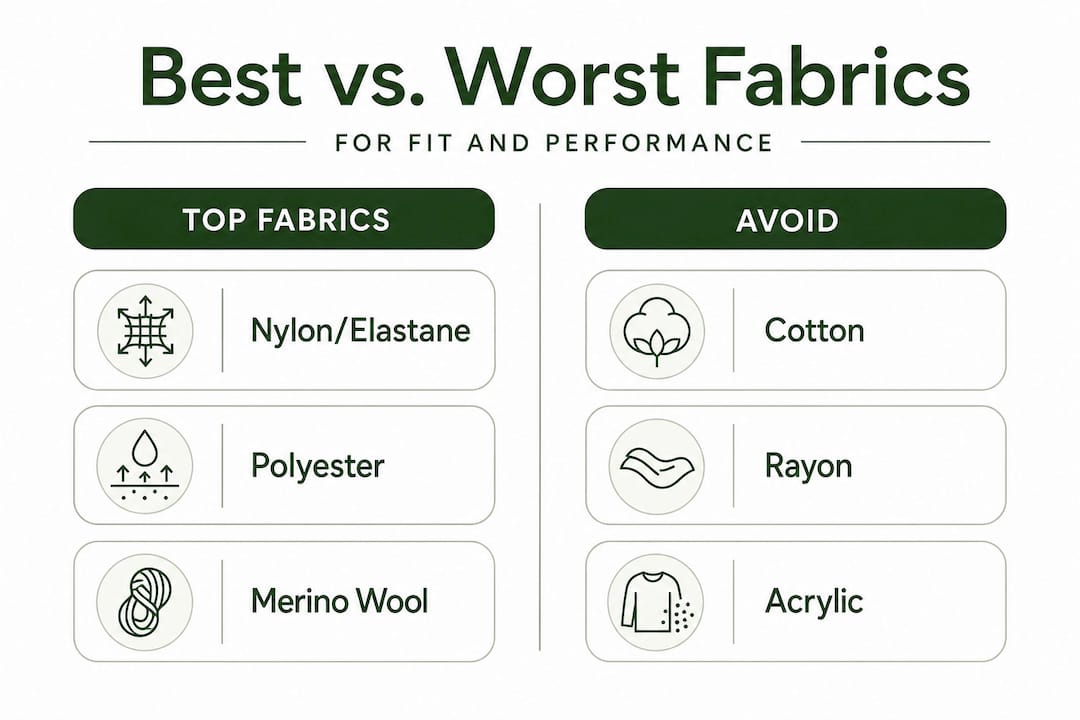
Here’s how common activewear fabrics compare:
| Fabric | Moisture wicking | Shape retention | Comfort rating | Best use |
|---|---|---|---|---|
| Nylon + elastane | Excellent | Excellent | Very high | High-intensity training |
| Polyester + elastane | Very good | Very good | High | All-purpose workouts |
| Lyocell + elastane | Good | Good | Very high | Yoga, studio, athleisure |
| Cotton | Poor | Poor | Moderate | Rest days only |
| Cotton blend | Poor to moderate | Poor | Moderate | Casual wear, not training |
Cotton is the fabric most likely to let you down in a workout setting. It absorbs sweat rather than wicking it, which means it becomes heavy, clingy, and uncomfortable fast. It also loses its shape when wet, so leggings that fit perfectly at the start of a session can feel saggy and stretched by the end. Cotton has its place, but that place is not a HIIT class or a long run.
Pro Tip: Don’t just look at the fabric name on the label. Check the percentage breakdown. A legging labelled as “nylon blend” might be 60% nylon and 40% cotton, which dramatically reduces its performance. Aim for at least 75 to 80% technical fibre (nylon or polyester) with 15 to 25% elastane for the best combination of stretch, support, and moisture management.
Avoid fabrics that feel rough or stiff when stretched, that show pilling on the surface even before purchase, or that have a loose, open weave. These are signs the fabric won’t hold up under real training conditions.
Fit and construction: The difference-maker for comfort and durability
While fabric is crucial, it’s how brands cut and assemble those materials that really determines the activewear’s feel and lifespan. You can have the finest nylon-elastane blend in the world, but if the seams are poorly placed or the waistband lacks structure, the garment will still fail you.
“Leggings should include wide, stretchy waistbands and flat-lock seams to prevent chafing and ensure the garment stays in place during intense movement.”
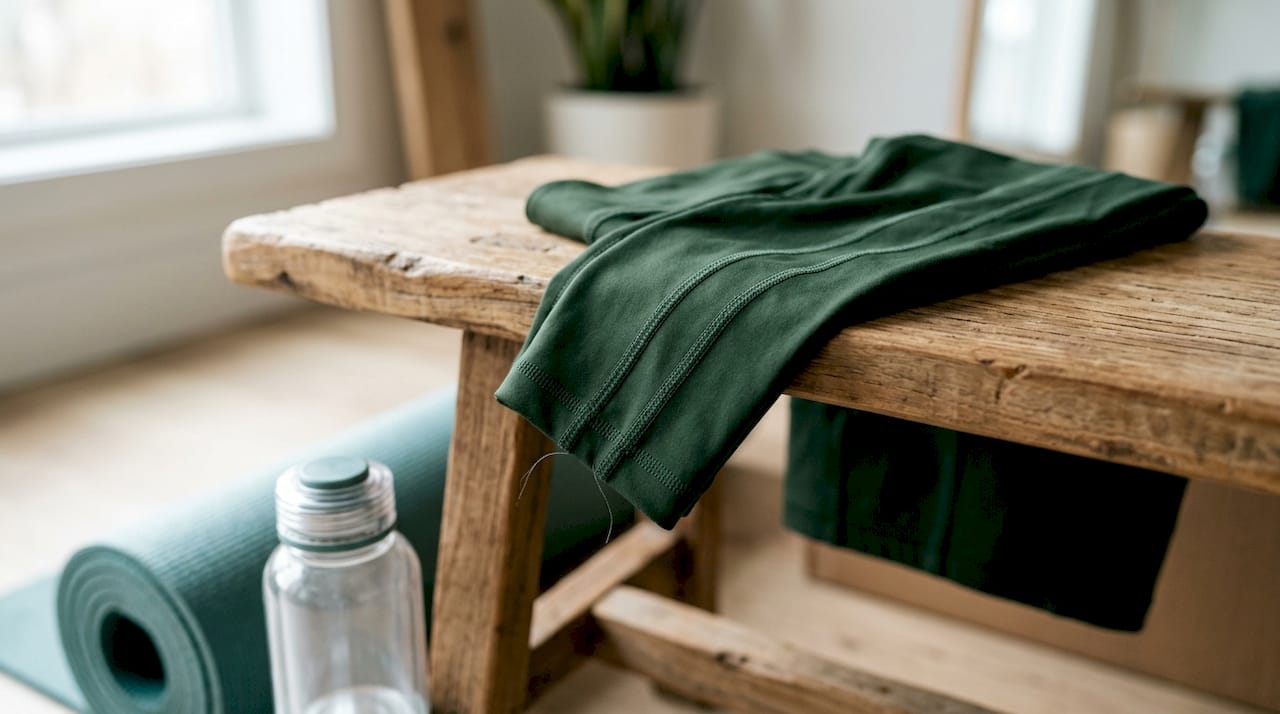
Seam type is one of the most overlooked construction details. Flat-lock seams lie flat against the skin, with the raw edges hidden inside the stitch. They reduce friction dramatically, which matters enormously during long runs or high-rep training. Exposed seams, by contrast, sit proud of the fabric surface and can cause irritation and chafing within minutes of sustained movement. Always run your fingers along the inner thigh and waistband seams before purchasing.
Waistbands deserve their own scrutiny. A wide, structured waistband with internal grip or a fold-over design stays in place regardless of how dynamic your movement is. Narrow waistbands without structure tend to roll down during squats or fold over themselves during jumps. Construction details like waistbands that stay put are directly linked to both comfort during training and the long-term durability of the garment.
Use this numbered checklist to self-test fit and construction in a change room or at home:
- Put the garment on and check the waistband sits flat and doesn’t roll or gap at the back.
- Perform a deep squat and check for fabric pull-down at the waistband.
- Bend forward at the hips and check for transparency across the seat and thighs.
- Do a few high knees and check that the fabric doesn’t shift or bunch.
- Run your fingers along all inner seams to check for raised or rough edges.
- Check the crotch gusset (the diamond-shaped panel at the base) for reinforcement stitching.
- Stretch the waistband sideways and check that it snaps back cleanly without distortion.
Pro Tip: Always move through at least one deep squat and one forward bend before deciding on a pair of leggings. These two movements reveal the vast majority of fit and construction problems, including slippage, transparency, and seam placement issues.
Testing quality yourself: Smarter shopping for long-lasting gear
Even with quality materials and smart construction, you’ll only know for sure if the garment performs by testing it through your own quality-control process. This is where informed shoppers consistently outperform those who rely on brand reputation alone.
Research supports a mini quality-control checklist approach over trusting logos or marketing language. Here’s a practical numbered process you can apply whether you’re shopping in-store or evaluating a recent online purchase at home:
- Abrasion test: Rub two layers of fabric together firmly for ten seconds. Quality fabric resists pilling. Weak fabric starts to fuzz immediately.
- Shape recovery test: Stretch the fabric hard in all four directions, hold for five seconds, then release. It should snap back fully without distortion.
- Opacity test: Hold the fabric up to a bright light source and stretch it to the tension it would experience during a squat. If you can see light through it clearly, it will be see-through during movement.
- Comfort and seam check: Wear the garment for ten minutes and move actively. Note any friction points, rolling, or pressure spots.
- Fit under movement: Check opacity and comfort at the angles and tension your workouts actually create, including deep squats, stretching, and high-knee movements.
Pro Tip: Hold the fabric over your hand and stretch it firmly in both directions under a bright light. This mimics the tension across your seat and thighs during a squat. If you can see your hand clearly through the fabric, the leggings will be see-through during training.
Be wary of these common marketing terms and what they actually require you to verify:
- “Squat-proof”: Verify with the opacity test above. This claim is not regulated and means nothing without your own check.
- “Performance mesh”: Check that mesh panels are placed in low-friction zones and that the weave is tight enough to provide coverage.
- “Four-way stretch”: Stretch the fabric diagonally in both directions. True four-way stretch moves equally in all directions.
- “Moisture-wicking”: Check the fabric composition. Wicking requires technical fibres. If cotton is the primary fibre, the claim is misleading.
- “Compression”: Compression should feel firm but not restrictive. If a garment feels tight only when new and loosens after one wash, the compression is superficial.
Special priorities: Sports bras and support gear
Garments with special support requirements demand an even more focused evaluation. Sports bras are arguably the most technically demanding piece of activewear a woman can buy, and the consequences of getting it wrong go well beyond discomfort.
Quality in a sports bra is strongly tied to moisture-management fibres and construction features that move sweat away, reduce hot spots, and minimise chafing at seams and laminations. A sports bra that traps heat and moisture against the skin becomes a source of irritation within minutes of high-intensity exercise.
Signs of a genuinely high-quality sports bra include:
- Adjustable straps that allow you to customise fit across different activities and body changes
- Wide underbands that distribute support load evenly and don’t dig in or ride up
- Seamless or strategically laminated construction at high-friction zones including underarms and the front closure
- High-wicking technical fibres as the primary fabric, particularly in the cup and underband
- Encapsulation or compression design appropriate to your cup size and activity intensity
- Breathable mesh panels placed at the back and underarm to manage heat during sustained effort
Many women overlook the construction features that determine both support quality and long-term comfort, focusing instead on colour, pattern, or brand name. A sports bra that looks great but lacks a structured underband or uses low-wicking fabric will fail you during any session that raises your heart rate significantly.
Why relying on brands and buzzwords isn’t enough
Here’s an uncomfortable truth about the activewear market: brand prestige and price tags are often the least reliable indicators of actual quality. We’ve seen this play out repeatedly. A celebrity collaboration launches with enormous fanfare, the leggings sell out in hours, and within weeks social media fills with complaints about transparency, pilling, and waistbands that won’t stay up.
The problem is that marketing budgets and quality budgets are often in competition. A brand spending heavily on influencer partnerships and campaign photography has less to invest in fabric sourcing and construction standards. This isn’t universally true, but it’s true often enough to matter.
The research backs this up clearly. A quality-control checklist based on abrasion resistance, shape recovery, opacity, and comfort under movement is a more reliable predictor of satisfaction than any logo or price point. We’ve seen $200 leggings fail the squat test and $60 pairs pass with flying colours. The difference is always in the fabric composition and construction detail, not the branding.
There’s also a sustainability dimension here worth considering. When you buy activewear that genuinely lasts, you buy less of it. A wardrobe built on three or four rigorously tested, high-performing pieces is better for your budget and better for the environment than a rotation of trend-chasing purchases that wear out after a season. Making informed choices based on research rather than hype leads to longer-lasting confidence in your workout wardrobe, and that confidence compounds over time.
The shift in mindset we’d encourage is simple: treat every activewear purchase like a product test, not a fashion decision. Move in it, stretch it, hold it to the light, and check the label before you commit.
Find high-quality activewear you can trust
If you’re ready to put these tips into practice, finding gear that actually performs is the final piece.
At Skoki Maev, every piece in our activewear collection is selected with exactly these criteria in mind: technical fabric composition, flat-lock construction, structured waistbands, and genuine opacity under movement. We know what it feels like to be let down by activewear that looked the part but didn’t deliver, and we’ve built our range around the standards this guide describes. Browse our collection and shop with the confidence that the hard work of quality evaluation has already been done for you.
Frequently asked questions
How do I know if leggings are see-through before buying?
Check fabric opacity by stretching the material firmly over your hand under a bright light, or move through full-depth squats in good lighting. Opacity should be checked at the angles and tension your workouts create, because thin spots only reveal themselves under real movement stress.
Why is cotton not recommended for activewear?
Cotton absorbs and holds moisture rather than wicking it away, making it heavy and uncomfortable during sweat-heavy sessions. Fabrics that wick moisture and include elastane for shape retention are far superior for training performance and durability.
What construction features should I look for in sports bras?
Look for moisture-management fibres in the cup and underband, wide underbands for even support distribution, adjustable straps, and seamless or strategically laminated designs at friction points. Sports bra quality is strongly tied to these construction details rather than appearance alone.
Is expensive activewear always better quality?
High price does not guarantee quality, and many premium-priced garments fail basic fabric and construction tests. A quality-control checklist focused on abrasion resistance, shape recovery, and opacity is a far more reliable guide than cost or brand reputation.